
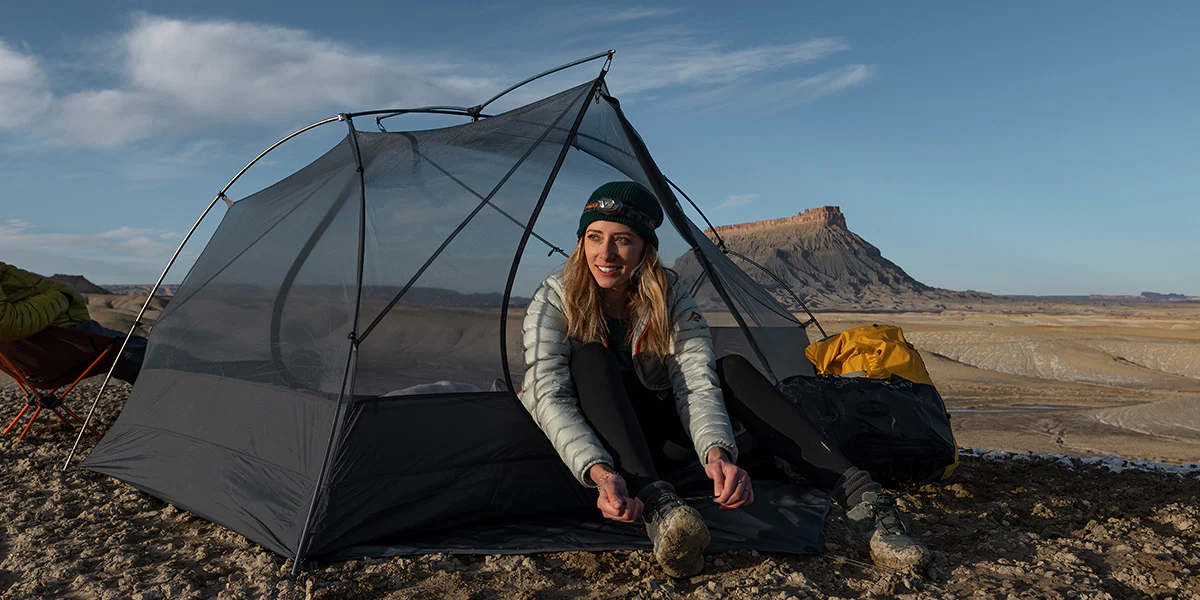
There’s something uniquely powerful about camping alone as a woman. It’s not just a trip; it’s a conversation with yourself, set to the soundtrack of rustling leaves and a crackling fire. Honestly, it can feel daunting. The world, you know, has a way of planting seeds of doubt. But with the right blend of preparation, gear, and headspace, solo camping transforms from a scary idea into a profoundly rewarding ritual.
Shifting Your Mindset: The First and Most Important Piece of Gear
Let’s be real. Your brain is your first line of defense—and your greatest source of joy—out there. Before you even look at a tent, you gotta look inward.
Start small. Your first solo camping trip shouldn’t be a week in the remote backcountry. Try a single night at a well-populated, familiar campground. It’s like dipping a toe in before diving in. This builds confidence in manageable chunks.
Embrace the nerves. Feeling a little anxious? Good. That’s your instincts sharpening. The goal isn’t to erase the feeling, but to listen to it, manage it, and then move forward anyway. That’s courage.
And reframe “alone” to “self-sufficient.” You’re not lonely; you’re self-reliant. Every problem you solve—pitching the tent in a breeze, figuring out the stove—is a tiny deposit in your confidence bank. It adds up fast.
The Safety Toolkit: Practical Strategies for Peace of Mind
Here’s the deal: safety isn’t about living in fear. It’s about creating a bubble of awareness and control so you can actually relax. These strategies are your bubble.
Before You Go: The Planning Phase
Share your plans. And I mean details. Send a trusted person your campground name, site number, planned route, and when you expect to check in. Set a hard “if you don’t hear from me by X time, call for help” protocol. Then stick to it.
Research, research, research. Read recent reviews of the campground. Talk to rangers. A good question to ask: “Is there cell service at the site?” Knowing you can get a signal is a modern comfort we shouldn’t ignore.
On-Site Safety Moves
Trust your gut. This is non-negotiable. If a person or a situation feels off, it is. You have zero obligation to be polite. Lock your car, move sites, or even leave. Your intuition is your superpower.
Create a “camp presence.” At popular campgrounds, I sometimes bring two camp chairs. Sounds silly, but it subtly suggests you’re not alone. You can even hang an extra jacket. It’s a low-key deterrent that costs nothing.
Keep essentials close. A small bag with your phone, keys, headlamp, and a personal safety alarm (like a She’s Birdie) should be within arm’s reach at all times, especially after dark.
Gear Up: The Solo Woman’s Camping Checklist
Your gear list for solo camping isn’t that different from any other—until it is. The emphasis shifts to reliability, simplicity, and yes, a few security-minded items. You want gear you can trust implicitly, because you’re the only one setting it up.
| Category | Key Items & Solo-Specific Notes |
| Shelter & Sleep | Practice at home! A freestanding tent is easiest. A high-quality sleeping pad and bag rated for the climate are non-negotiable for morale. |
| Security & Communication | Personal safety alarm, fully charged power bank, whistle on your keychain. Consider a satellite messenger (like Garmin inReach) for remote trips. |
| Lighting | Headlamp (with red light mode) plus a lantern for ambient camp light. Darkness feels less intimidating when you control the light. |
| Kitchen & Food | Simple is best. A single-burner stove, one pot, and pre-prepped meals. No-cook options (trail mix, bars, jerky) are great backups. |
| First Aid & Repair | Customize your kit. Include blister care, medications, and a basic repair kit (duct tape, cord, multitool). |
A quick note on that tent practice: pitching it blindfolded in your living room might be overkill, but being able to do it quickly in fading light? That’s a game-changer. It turns a potential stress moment into a “I’ve got this” moment.
Embracing the Solo Experience
With safety and gear handled, you can finally sink into the magic. Solo camping as a woman offers a rare kind of clarity.
Your schedule is your own. Feel like hiking at dawn? Do it. Want to spend three hours reading in the hammock? Go for it. There’s no compromise, no discussion. It’s liberating.
You become hyper-observant. You’ll notice the way the light filters through the trees, the busy work of a woodpecker, the subtle shift in wind direction. Without conversation, your senses open up. It’s a form of active meditation.
And yeah, you might get bored. For a minute. Then that boredom often cracks open into creativity or deep rest. Bring a journal. Don’t be afraid to just sit with your thoughts—they can be surprisingly good company.
The Unspoken Truths & Parting Thoughts
It won’t all be Instagram sunsets. There will be moments of frustration—a stubborn knot, a sudden rain shower. You’ll maybe feel a pang of loneliness as night falls. That’s all part of the texture of the experience. The low points make the highs—like that first sip of coffee as the mist burns off—feel earned, and sacred.
The art of camping solo as a woman, in the end, is the art of trusting yourself. It’s realizing that the competence and resilience you cultivate out there trickles back into your everyday life. You carry the quiet confidence of someone who knows how to build her own shelter, literal and metaphorical. So start planning that trip. The woods are waiting, and so are you.